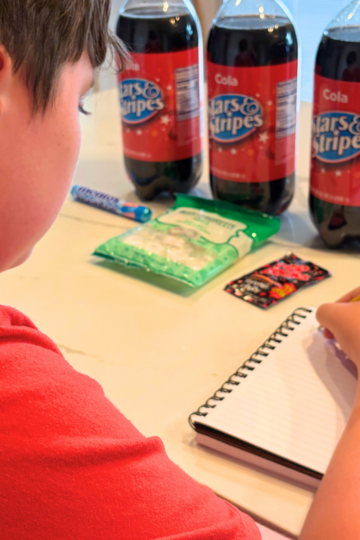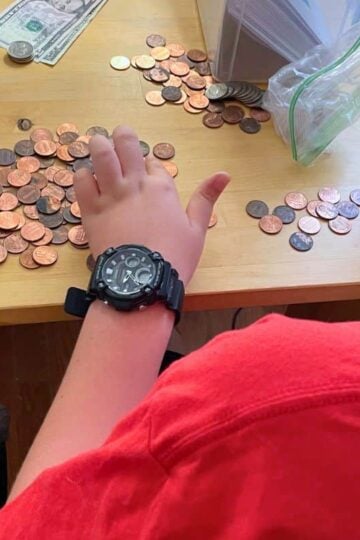
Grab financial literacy worksheets kids and teens can actually relate to, from teen budgeting and savings goals to bill-paying practice.
Trying to teach teens about money concepts that seem way off in the future is quite challenging.
I mean, teens are wayyyyyy more worried about who they’re sitting with at lunch than learning about the importance of saving 3 months of expenses in an emergency fund.
It’s a complete mismatch of priorities.
But let’s be real – they really need to learn about and practice these real-life money skills before they get their hands on their first paycheck (and can do some real damage).
That’s why I created many of these financial literacy worksheets below – to sync money concepts to a child’s and a teen’s current life (as best as possible).
Financial Literacy Worksheets
Each of these financial literacy worksheets is designed to meet kids and teens where they are right now – with real-life situations, decisions, and challenges they can actually relate to – so they start caring about money today (not when their future mortgage payment is breathing down their neck).
1. Money Life Skills Worksheet
Here is a roadmap to your child’s money education – designed to give YOU clarity on what to teach, and your child to take ownership by checking off money skills as they feel confident about them.
It’s a powerful worksheet that transforms money lessons into a self-driven process and allows your child to track their growth.
Just hear what Jessica has to say about it:
“I've got 3 kids, and they're sort of all in different stages of their life. As a parent, you don't really know if they listen to you when you sort of talk about these topics, and I wasn't sure how much they knew and I thought that the Money Life Skills Checklist on your website was fabulous. You've made me more confident in my conversations with my kids, so bravo to you. Your website is soooo good!” Jessica Nguyen, mama of three
Then what comes next? Getting consistent money into your child’s hands (so that they can learn how to use it).
2. Kid Money System (KMS) Calculator
Maybe you’ve known for a while that you need to start some sort of allowance or chore commissions with your child, OR, you started one and it’s just gone wayward.
Not a problem.
Download this Kid Money System Calculator, and figure out exactly how much money to pay or give your child (and why). This parent-focused financial literacy tool helps you align everything with your family’s Money Values and lays the foundation for your entire Kid Money System (KMS).
Once you’re ready to turn these numbers into a real-life system at home, check out the Kid Money System Builder. It’ll walk you through exactly how to set things up so that your child automatically self-discovers some critical money lessons and consistently practices money skills.
Hear what Rebecca, Mom of a 9-year-old and 5-year-old, has to say about it:
“I wanted more information about money systems for kids that can grow with families. After using the Kid Money System, we now know what we want our kids to learn about money. We have a base allowance set for expected daily contributions, commission chores that can be completed once daily, and project chores that are available to earn on once a week. We’re starting Week 3 after setting everything up, and it’s going well!”
3. Common Teen Expenses List
If you ask a teenager what their expenses are, you’ll likely see their eyes glaze over.
That’s because teens don’t think in terms of “expenses”. That’s too “adult” sounding.
I created this list of Common Teen Expenses so that they can look through it and just highlight the things and services they purchase periodically.
It’ll help jog their memory and build some spending awareness!
Hint: Pair this with the free Teen Budget Worksheet + Money Calendar, below, so that they can just highlight the things they think they’ll spend money on come next week and be able to fill out their budget more easily!
4. Teen Budget Worksheet + Money Calendar Duo
Downloaded and used by over 3,000 teens, these financial literacy worksheets are about the most foundational thing I offer here.
But don’t take my word for it.
"We worked on the Teen Budget Worksheets in class last week. It really opened up the students to seeing what they earn and spend weekly. Thanks again." – Kelly Dodd, Child Development and Health Teacher
Hint: You’ll also want to check out a single event budgeting printable for one of a teen’s biggest events of their lives, the prom. It’ll help them plan ahead and prioritize costs on a limited budget.
If your teen is ready to go beyond a single worksheet and build a repeatable system they can take with them and use in young adulthood, then the Teen Budget Binder is your next step.
5. Earn Your First $100 Tracker
Earning money is important, and this tracker helps motivate kids and teens to do so.
They might think it’s impossible to earn $100, but breaking it down into bite-sized pieces will help them see that it is.
The powerful shift they’ll make: if I want or need money, I can go out there and make it happen.
Once your teen earns their first money, the next step is learning how to manage it. The Teen Budget Binder helps them make the most of every dollar they earn.
6. Savings Goal Kit
Most kids and teens don’t save money because they don’t know what to save for.
This leads to the purchase opportunities right in front of them to make more sense – an impulse purchase loophole frenzy ensues.
This free kit focuses a child on some quick-win savings goal they can work towards that’s based on something THEY want (one of the keys in any savings goal working at this stage in the game).
They’ll choose a goal that hits the sweet spot between exciting and achievable.
And the best part? They can come back to this worksheet again and again with each new savings goal. It’s a magical tool for instilling a lifelong savings habit.
7. Is It Worth It Printables
I can’t think of a single person – let alone a child or teen – who can’t use some help thinking through their spending decisions.
That’s exactly what this set of financial literacy worksheets does. It helps your child decide whether or not something they really, really, really want right now is worth it (it even sneaks in some tradeoff learning disguised as them just getting even more of what they want).
This is just the beginning. The Financial Decision-Making Course for Teens shows your teen how to handle all kinds of money decisions – when money runs out, when friends want to spend, and when they’re not sure what to do next.
8. Would You Rather Money Questions for Middle School & High School
This is such an engaging financial literacy activity for:
- Breaking the ice
- Opening up debate and conversation around money
- Learning about their money values
I’ve got a set for middle school students and a set for high school students.
9. Bill-Paying Project
I’ve seen very few resources available to show teens how to actually pay bills.
And it’s one of the money management activities they’ll do most often as an adult!
Which was the motivation behind my creating this financial literacy project.
Teens take on the role of bill payer, based on a job and income they’re given.
You organize the whole thing with a hanging envelope system, and it runs over 30 days.
Such a fun project to do!
"I have 3 classes of 30 Personal Finance students, and we are on day 8 of the project. We are using it as part of their classwork and the reflection is part of their semester project. I like that the students are getting the budgeting techniques they have been learning – I have had really good buy-in, and they are enjoying being responsible. I also like that they had to plan out their month of spending. I'm really thankful for the daily list of things to think about and prepare for." Jennifer Galbraith
This project is a powerful introduction to real-world money management. The Everest Money Simulation expands on it with a full classroom experience where students make ongoing financial decisions and see the consequences play out.
10. The Avalanche Money Decision Game
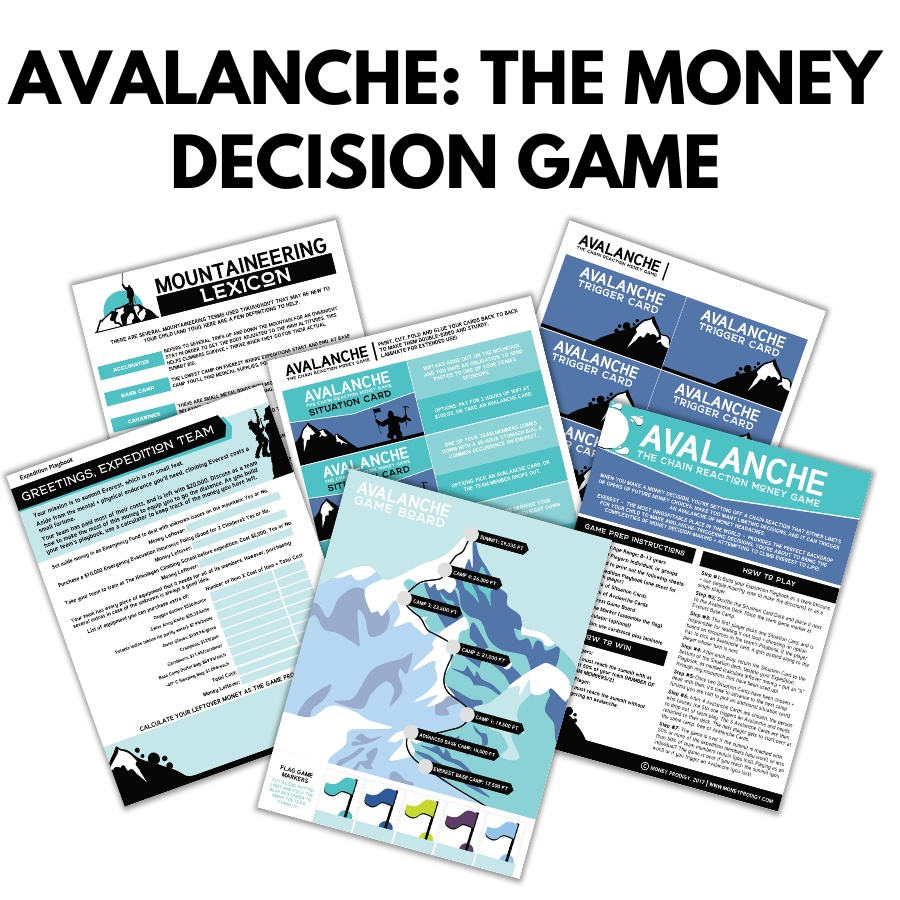
This is the Financial Literacy game where students’ choices either open up possibilities or close possibilities as the game progresses, with built-in natural consequences to their money decisions.
Because let’s be real: money decisions aren’t made in isolation. What we decide to do with our money today will affect how we can use our money days, weeks, even years down the road.
You’ll definitely want to check this out.
Murphy says:
“I bought the Avalanche Money Decision Game to use with my financial fitness lesson plans. It was so easy to set up and learn. And once my students learned it, they collaborated well, and it was hands-off for me. How awesome! My students specifically learned that it’s important to save for emergencies, things that are important at one point may not be at another time, and you have to be flexible and creative with spending and saving, at times.”
Don’t overthink this – bookmark this page and download just one set of financial literacy worksheets. Most importantly, try it with your teen and see what clicks. Then come back and stack he next money skill. Remember, money confidence doesn’t come from one practice, but from them making money decisions consistently and seeing how things play out. You’ve got this!

Amanda L. Grossman is a writer and Certified Financial Education Instructor (CFEI®), a 2017 Plutus Foundation Grant Recipient, and founder of Money Prodigy. Her money work has been featured on Experian, GoBankingRates, PT Money, CA.gov, Rockstar Finance, the Houston Chronicle, and Colonial Life.
Amanda is the founder and CEO of Frugal Confessions, LLC. Read more here or on LinkedIn.