Find 11 fall STEM activities for kids – candy science experiments, a build-it-on-a-budget catapult, exploding soda trials, and a pumpkin they track all season.
This isn’t science class – yet these easy fall STEM activities for kids will have them doing things like:
- Making predictions and testing them
- Changing a variable and retesting
- Building something and tweaking to make it better
- Looking at subjective vs. objective findings
- Messing stuff up (because, um, what kid doesn’t like some destruction?)
Did I mention you already own half the supplies (and the other half you can score at Dollar Tree)?
Oh yeah.
Halloween Science Experiments for Kids
What kid wouldn’t erupt into smiles when you tell them you’re about to do some candy science experiments?
These really deliver on both the lessons AND the fun.
1. Rate the Sourness: Subjective vs. Objective Measurements
Intro: What’s sour to me may be child’s play to you, and vice versa. That’s because we have different taste buds and different experiences.
Scientists deal with this all the time – trying to be objective when measuring things and collecting data, even though we’re all human and are built for subjectivity.
Supplies: 3-4 sour candies, a printable Sour Scale, pH test strips (optional), baking soda (optional)
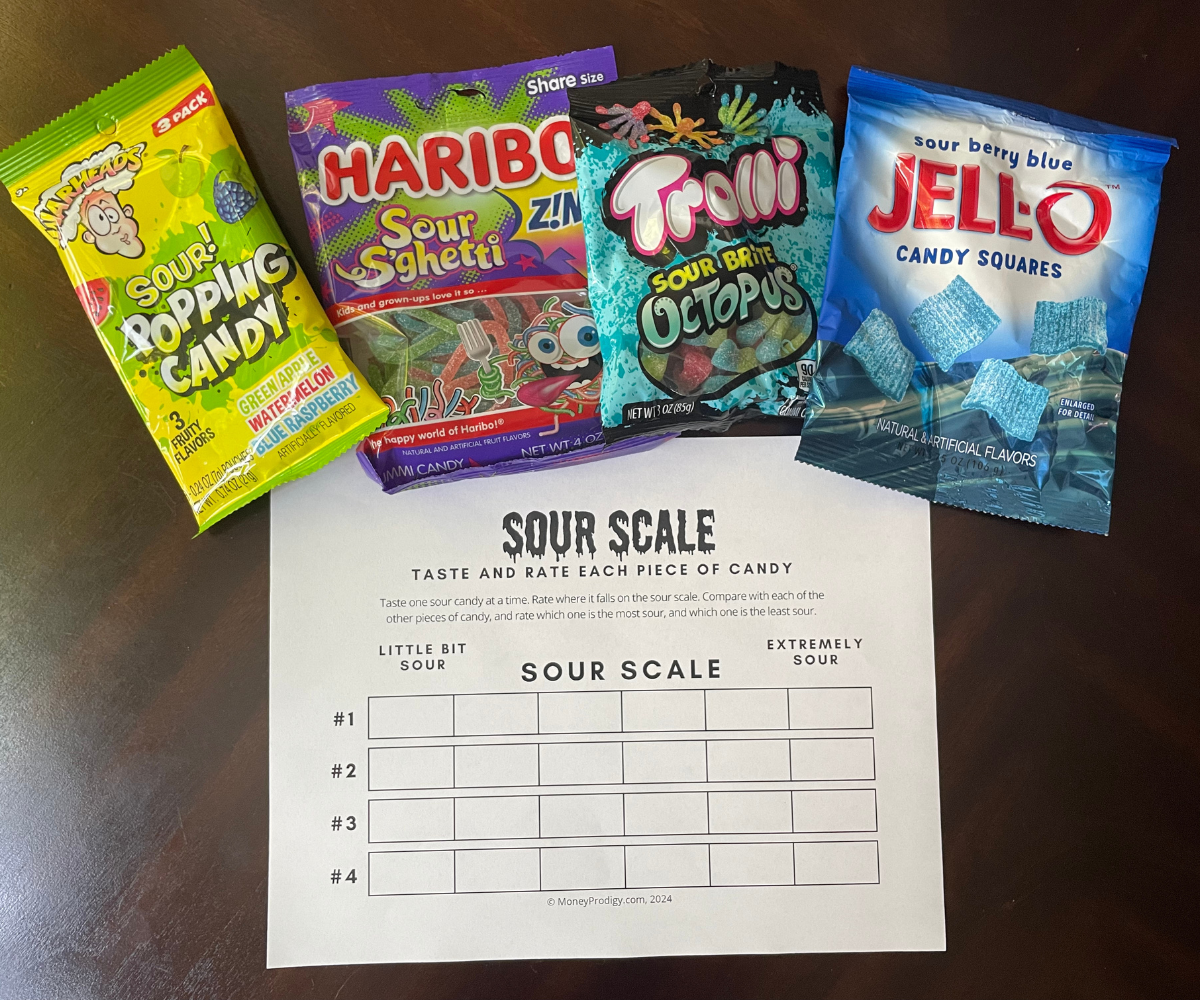
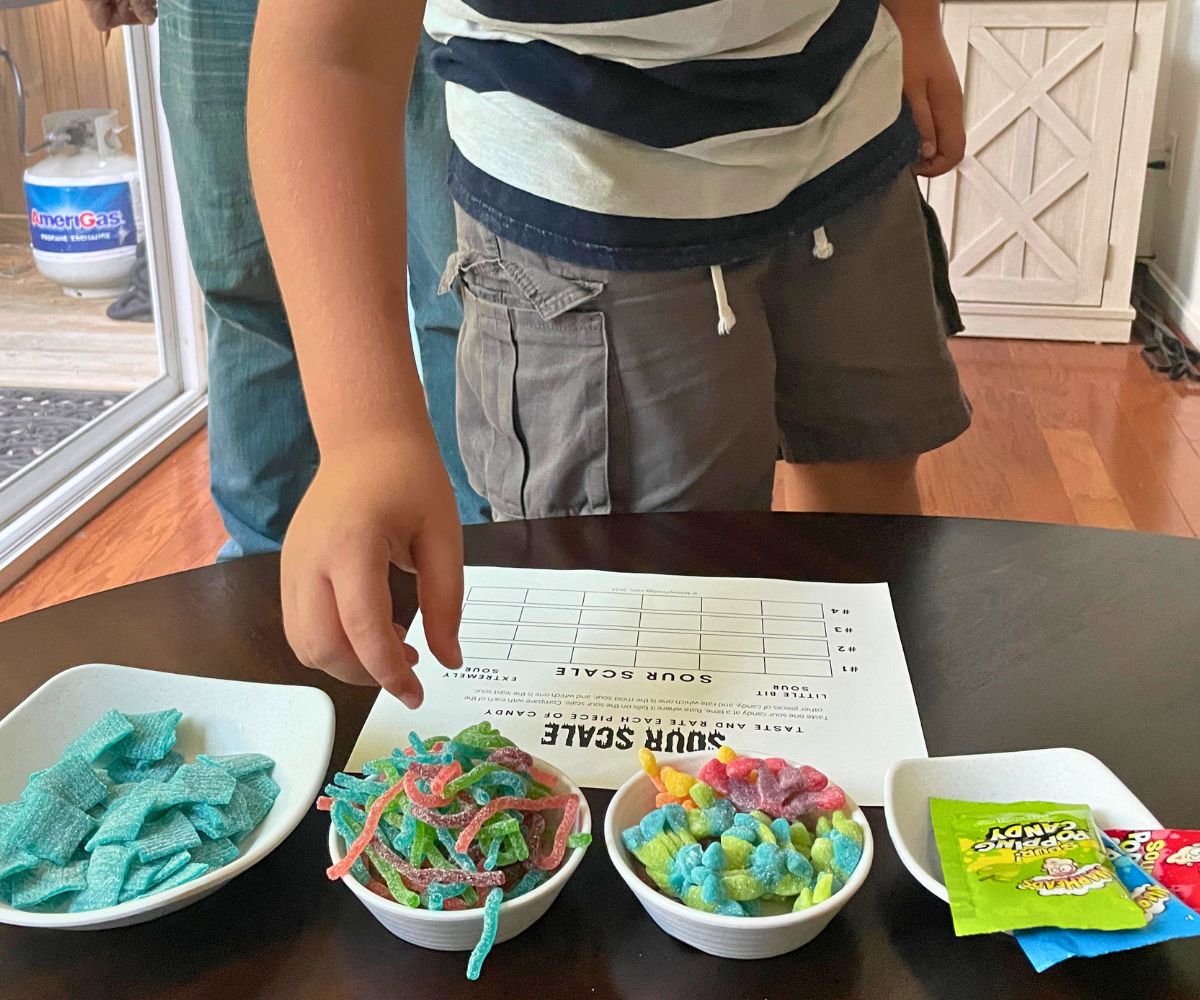
Gather several kids (at least 2) to try and determine which of the sour candies is the sourest.
Add numbers to the scale on the free printable Sour Scale so that you all can average scores together and come up with data that’s more concrete and less based on opinion.
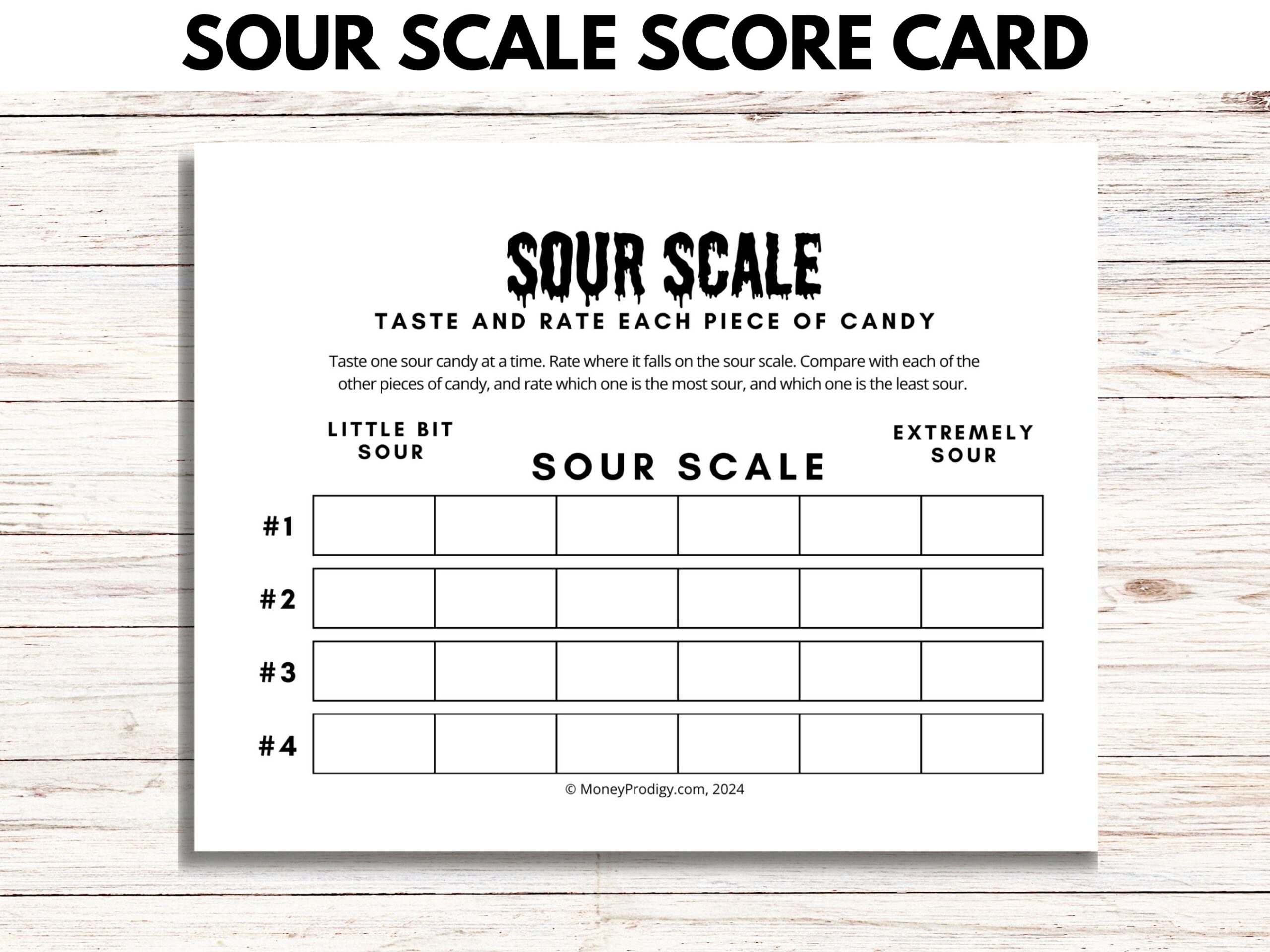
Label each candy a number so that everyone uses the same row. Have each person give a rating for each candy.
When everyone is finished, take the average from the group by adding up the scores from everyone per candy, then dividing by the total number of people participating. Record that averaged score on another sheet.
Bonus: Test each candy’s acidity level to determine which one, in fact, is the sourest from a scientific standpoint. You can use pH strips, or a baking soda test – dissolve the same amount of candy in the same amount of warm water, then put in the same amount of baking soda and see which cup fizzes the most (more acidity = more fizzing)
Were you guys right? Or did your subjective taste buds deceive you?
2. Halloween Candy Nose-Blind Taste Test
Intro: Kids often don’t realize how intricately linked our sense of smell and ability to taste something is.
They’re about to find out!
Supplies: 4 different kinds of popular Halloween candies, blindfolds for participants, printable scorecard, nose pincher (optional)
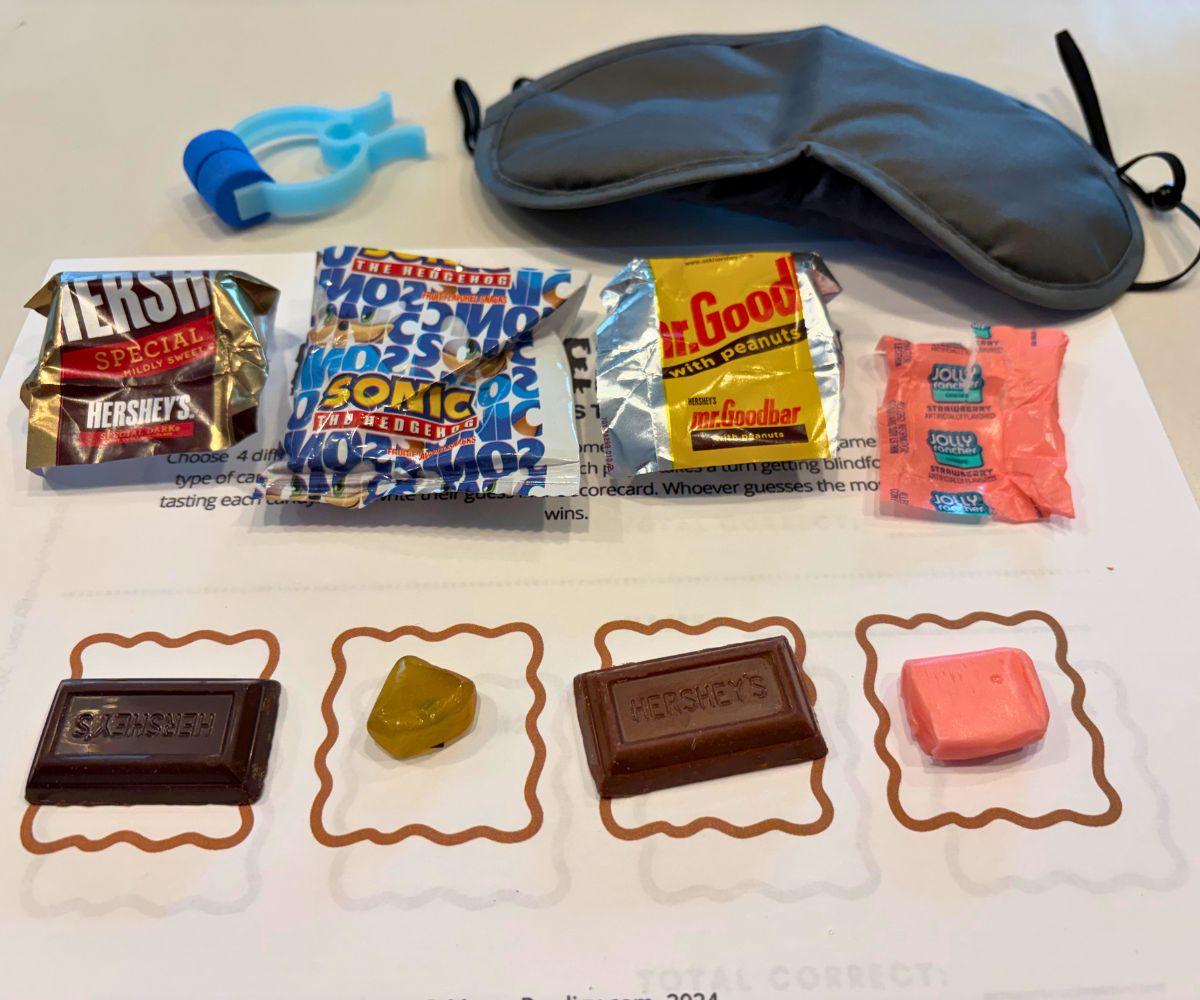
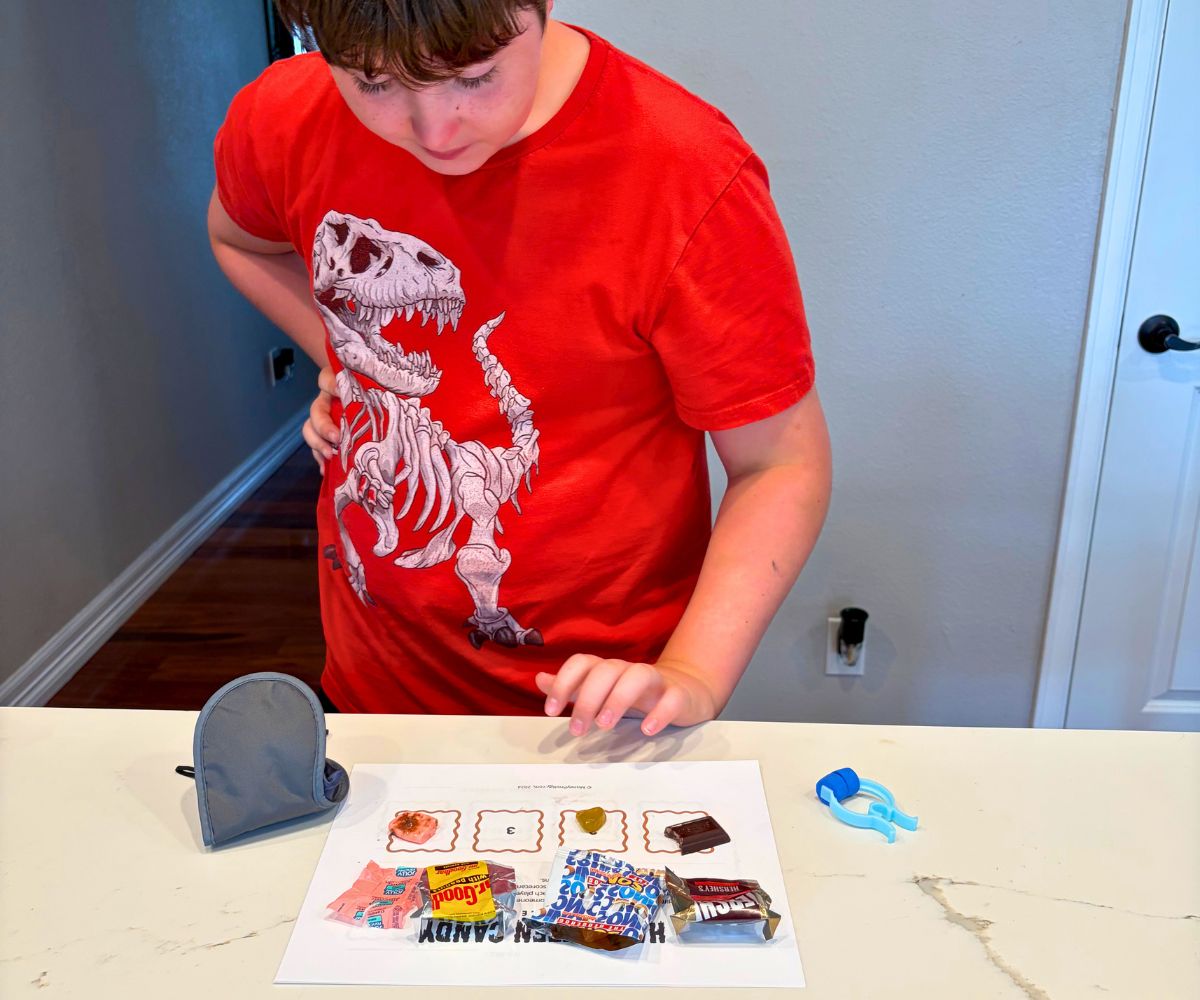
Blindfold your participants and instruct them to plug their nose (or use a nose pincher if you have it). Unwrap four mini candies and keep track of which is which behind the scenes.
When we did this, my son thought the Sonic gummy fruit candy was a caramel, and the Jolly Rancher was a piece of gum.
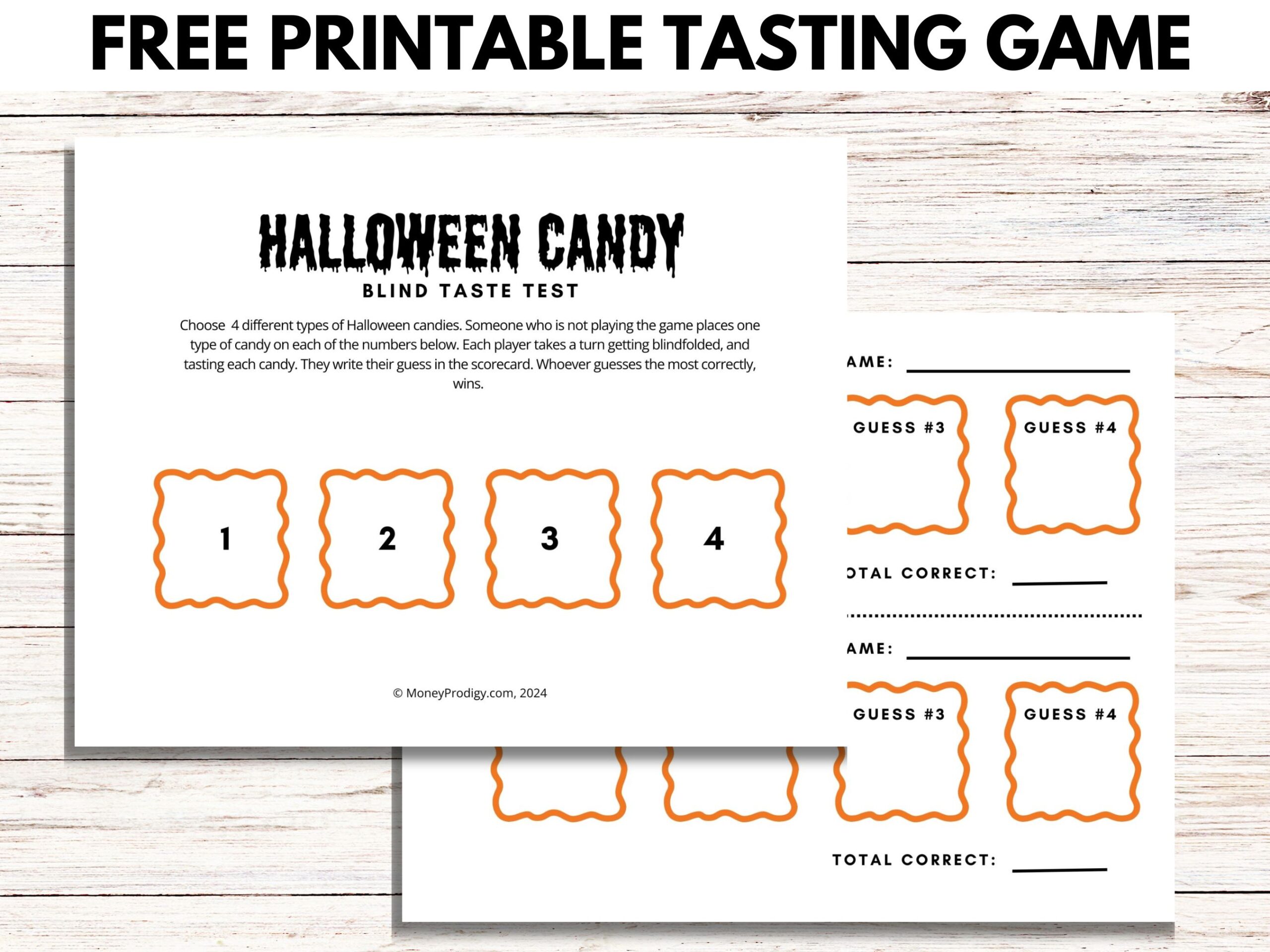
Whoever can guess the most candies correctly wins!
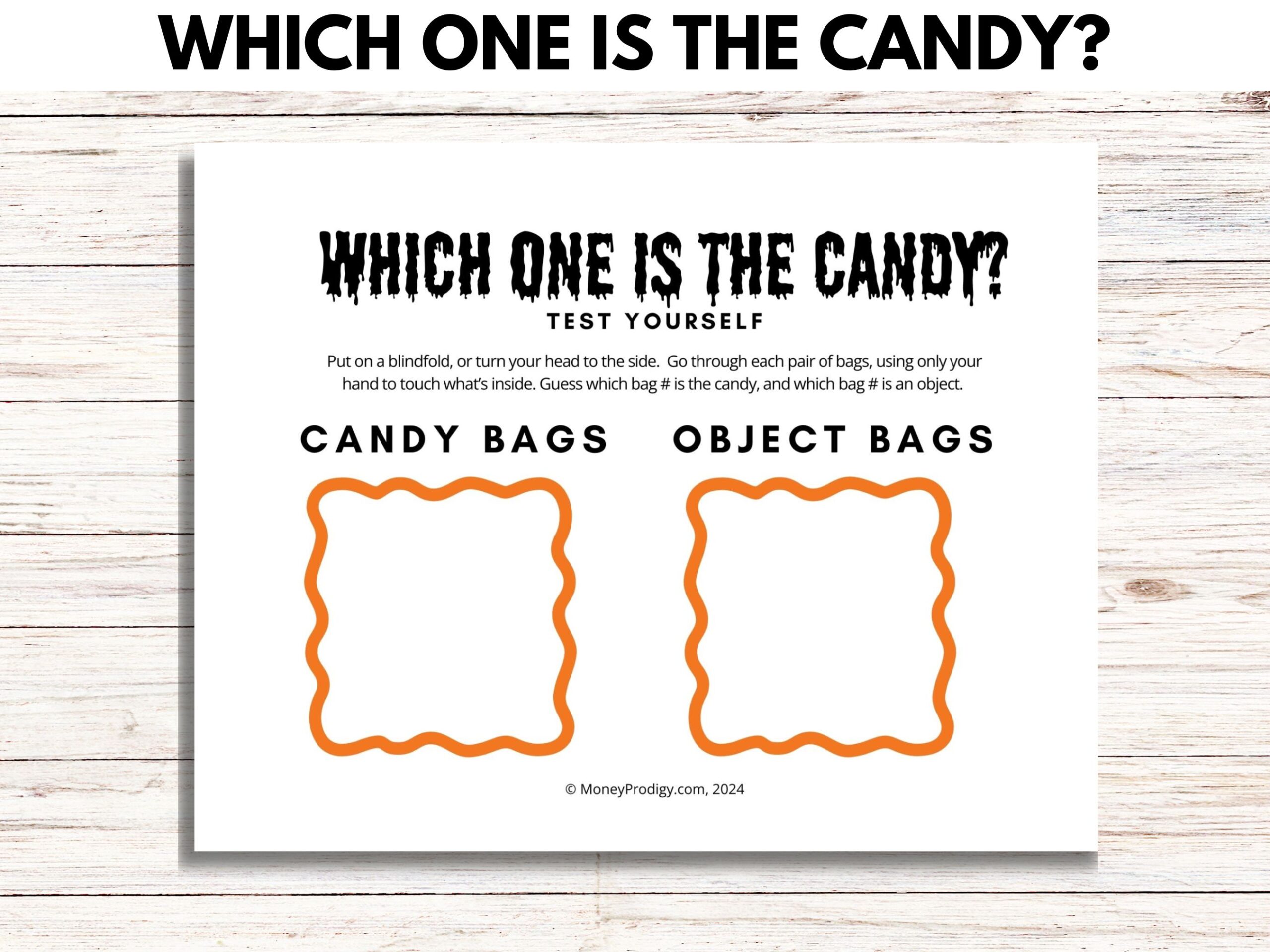
3. Observation & Inference: Which One is the Candy?
Intro: Scientists are constantly making observations (facts), and then inferring things based on those observations.
Generally, the more inputs or facts from their observations they have, the better their inferences can be.
But when they can only use one of their senses, or there are limitations on gathering those observations, the inferences can be…well…off.
There’s nothing like a really fun Fall STEM activity to teach this concept better to kids (who won’t know they’re learning!).
Supplies needed: bags that you can’t see through, 3-6 pairs of candy and items that feel just like one another (see below), printable scorecard, and blindfolds for players (optional)
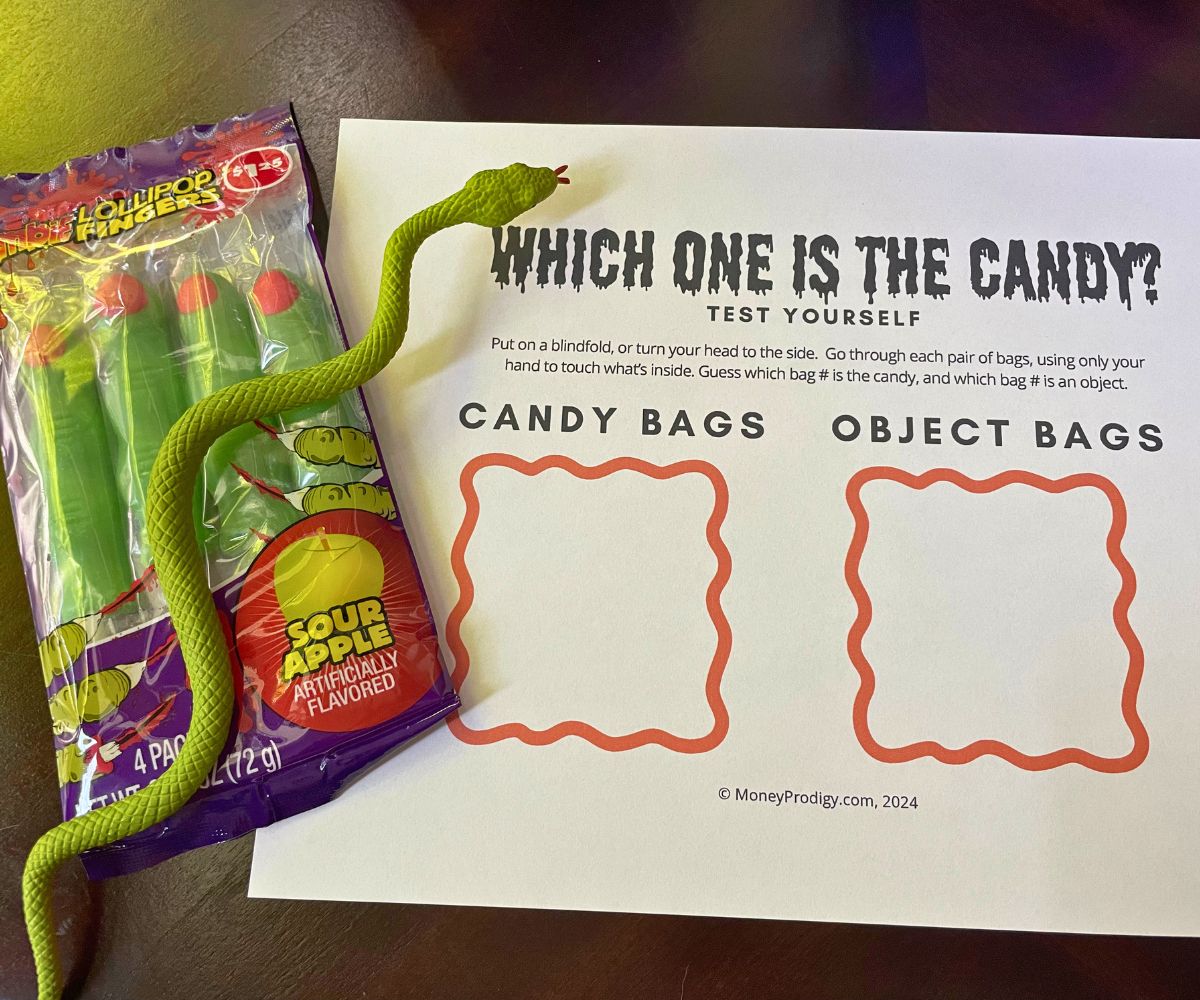
It turns out that lots of candies feel like some pretty common items.
Try these ones out:
- Cotton Candy vs. cotton balls
- Fruit Chews vs. clay
- Gummies vs. decorative window clings
- Pixie Stix vs. a straw
- Mini Cow Tales vs. clay
Put these into separate bags as pairings, and blindfold each other.
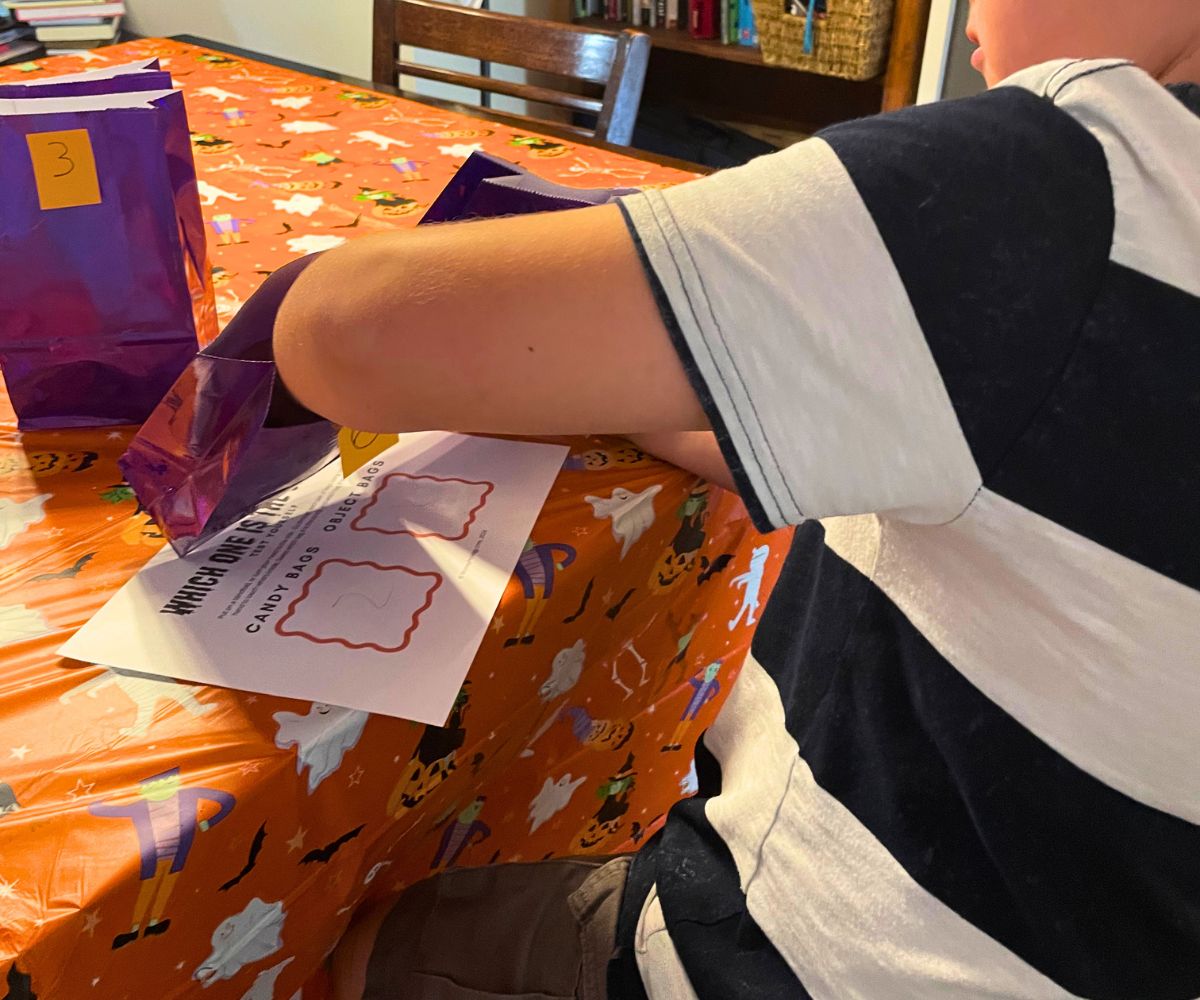
Can people guess which bags hold a piece of candy, and which bags hold a non-food item?
After one round, allow everyone to add in another sense or way to gather facts, such as being able to smell each bag.
My husband and son did this, and decided it’s a 10/10 activity! So much fun.
4. Exploding Candy Trials
Intro: Let your kids test which candy shoots soda the furthest (and then find out why the obvious pick loses – kids always think the Pop Rocks will be the winner, but it’s not true!).
Supplies: Gather a 2-liter of diet cola for each trial, plus any of the following candies you want to test: a roll of Mentos, a Wint-O-Green Life Saver, and a pack of Popping Candies.
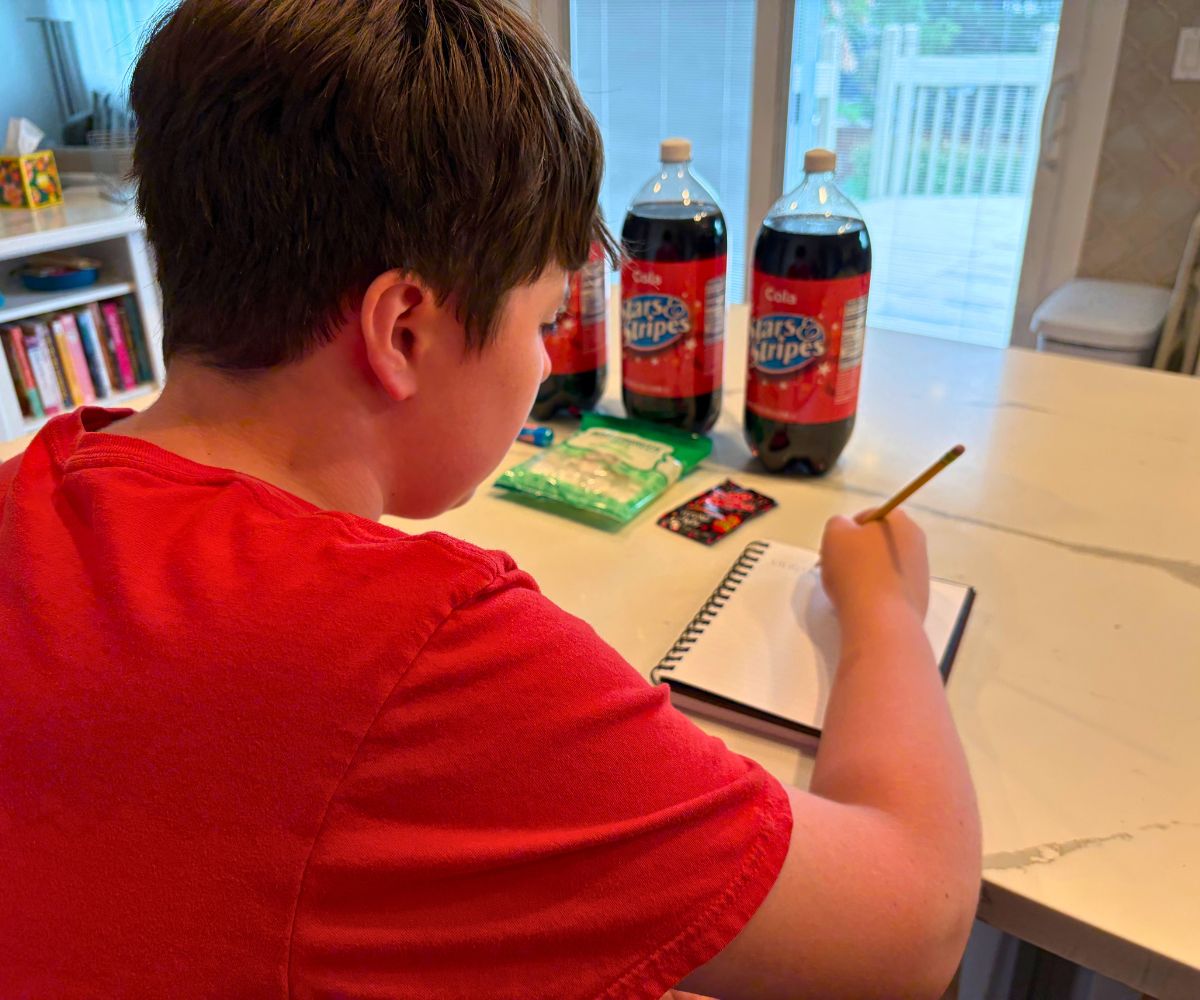
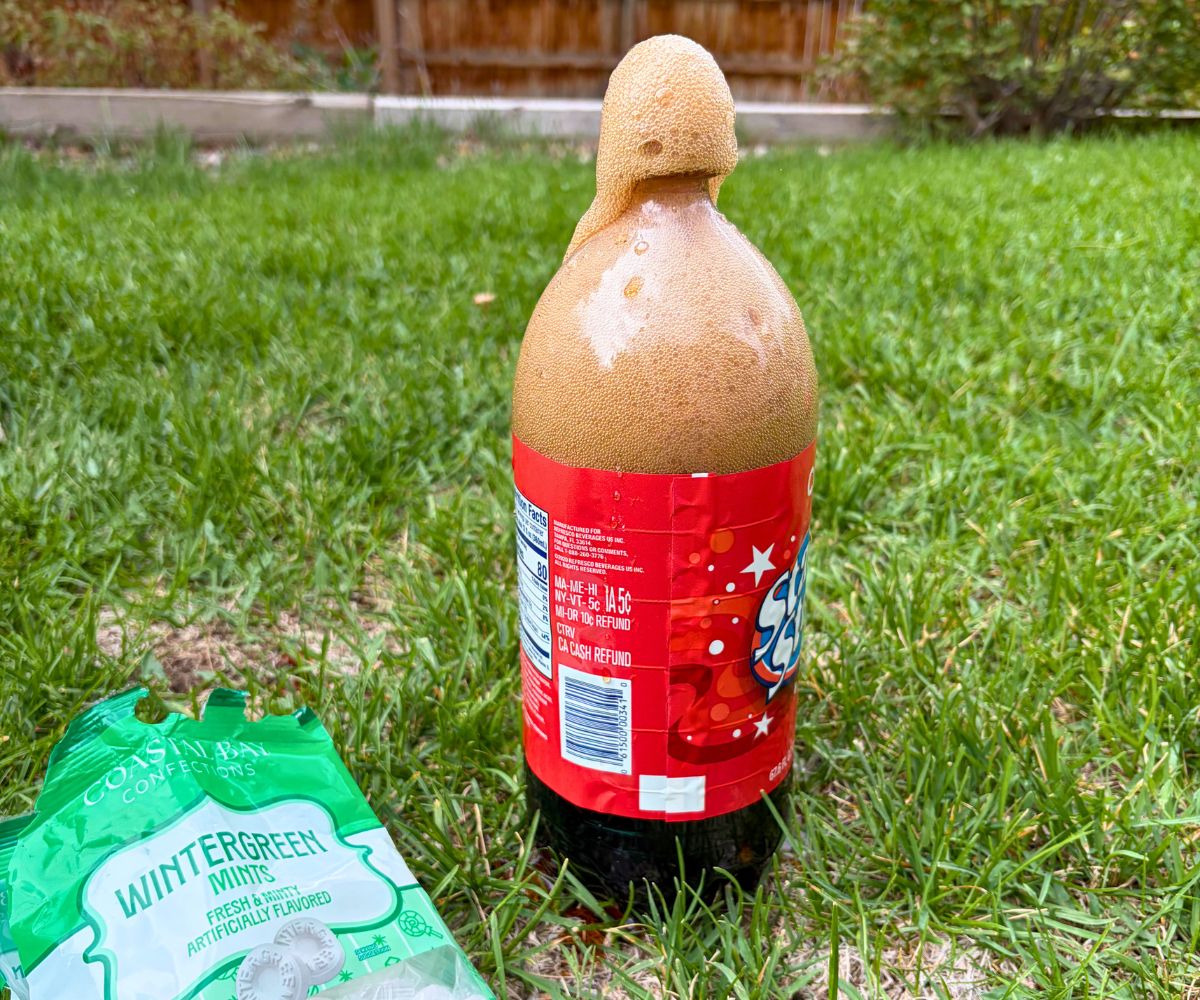
Kids should measure out the same amount of candy for each trial, add it to a new, 2-liter soda bottle, and stand back. After the “explosion” does or does not happen, have them measure how far the furthest amount of liquid goes with a ruler/measuring tape. Record the data.
When they get a winner, ask them why they think that particular candy made the soda explode further. Then, do a little research and see the real reasons. The answer may surprise you.
If they want to repeat the experiment? Let them tweak one thing, like crushing the candy beforehand, or using warm soda vs. cold soda.
Hint: Do this outside, and never cap the bottle you’re using.
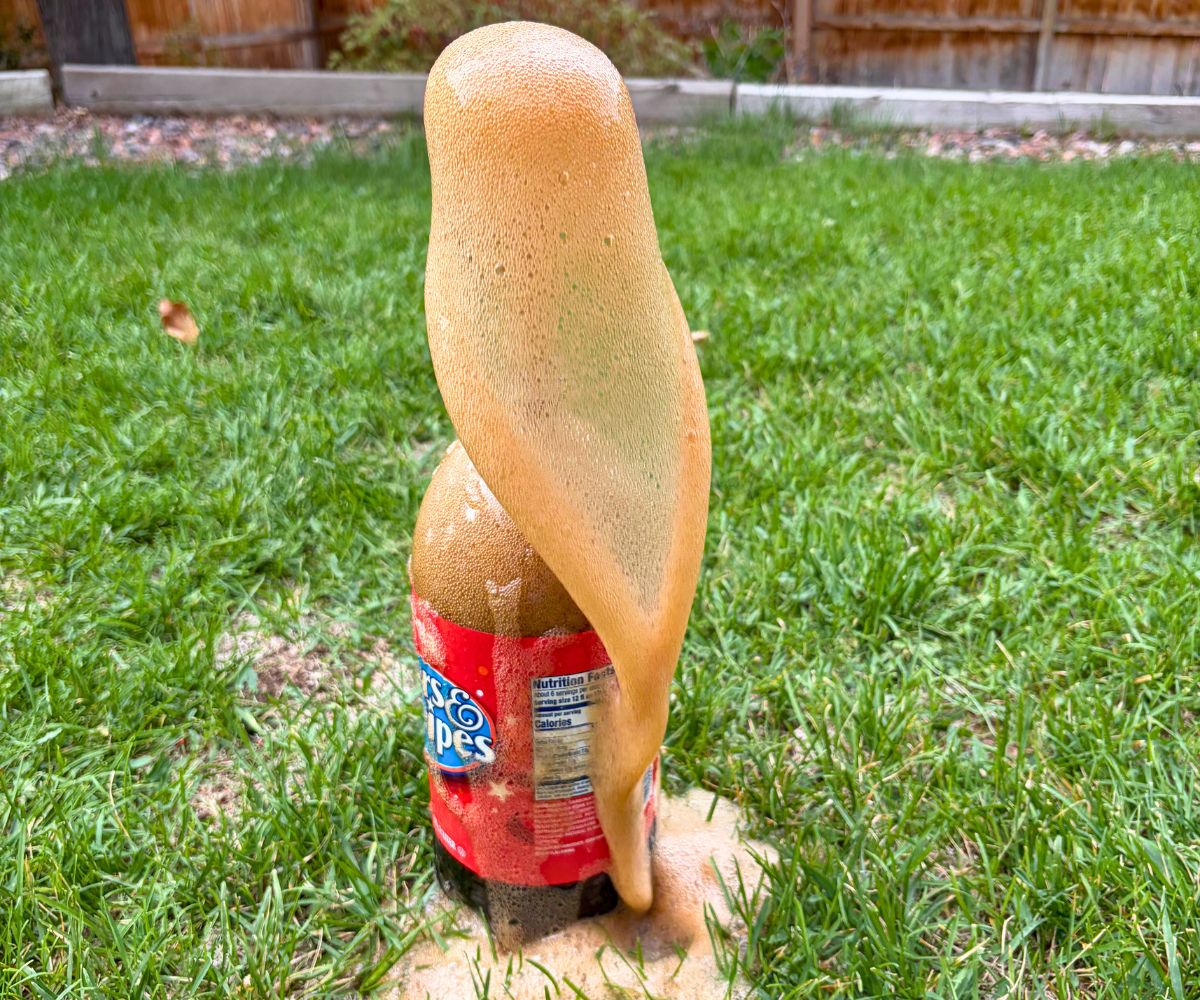
Bonus: Turn this into a mini-money lesson by having them price out how much it costs to run this experiment. Add up the total cost of all ingredients, then have them break it down for how much each trial cost (the 2-liter bottle plus the cost for just the amount of candy needed from a larger bag of candy). They’re looking for the cost-per-trial.
Fall Science Experiments
Let your child get their hands on some Fall seasonal items while doing some really interesting Fall science experiments.
1. The Rotting Pumpkin
Intro: Food does not stay good forever. And some food perishes, or rots, quite quickly. Lots of ways to preserve, or extend the life of food have been invented over the years so that there is less waste in the food supply, so that everyone spends less money on it, etc.
Let’s test out what kinds of preservation methods can keep our pumpkin from rotting first.
Supplies: two small pumpkins or two small gourds, one method to preserve it
Let your child pick out two similar small pumpkins or small gourds.
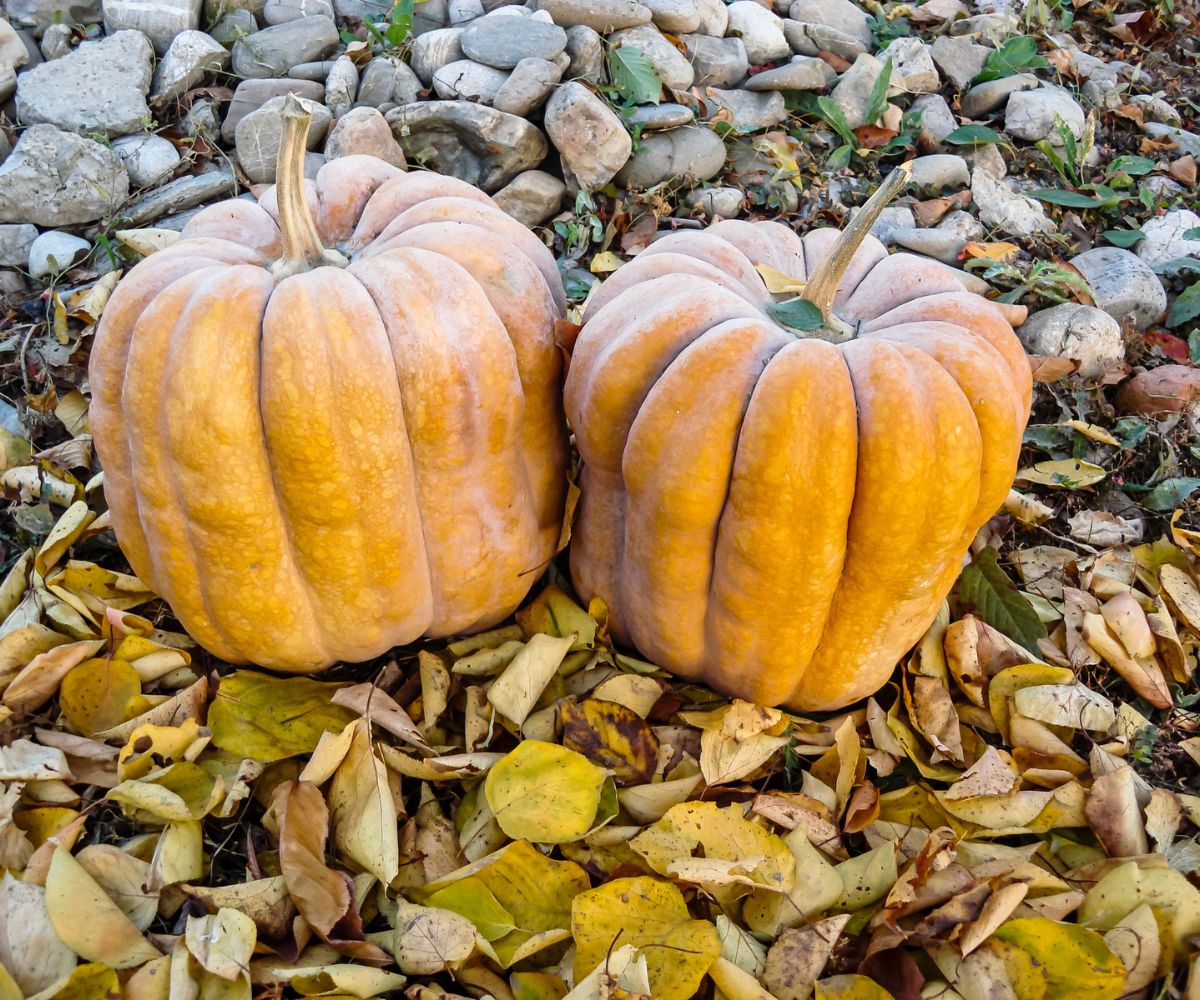
Then, let them apply a food preservation method to one (here’s a good historical overview of food preservation plus a few methods), while the other one lives outside in the elements (the control pumpkin).
How long do they think the control pumpkin will last, and how long do they think they can extend the life of the other pumpkin with the preservative?
A preservative method could be:
- Refrigerating the pumpkin
- Adding salt to the pumpkin insides
- Adding lemon juice to the pumpkin insides
- Etc.
Encourage them to take photos from week-to-week of the two side-by-side to see the changes happening as Fall progresses.
2. Cotton Ball Turkey Stuff
Intro: If you lightly drop cotton balls into a turkey (tissue box), you’ll fit X amount. If you press them into the box, you’ll fit many more. How many do you estimate you will fit, and just what gets compressed so that you can fit so many more (hint: air)?
Supplies: lots of cotton balls, an empty tissue box, tweezers, an oven mitt
Stuffing – my absolute favorite Thanksgiving food – is the inspiration behind this Fall STEM activity.
Have kids estimate how many cotton balls they can fit into the empty tissue box, letting them know they can only drop them in.
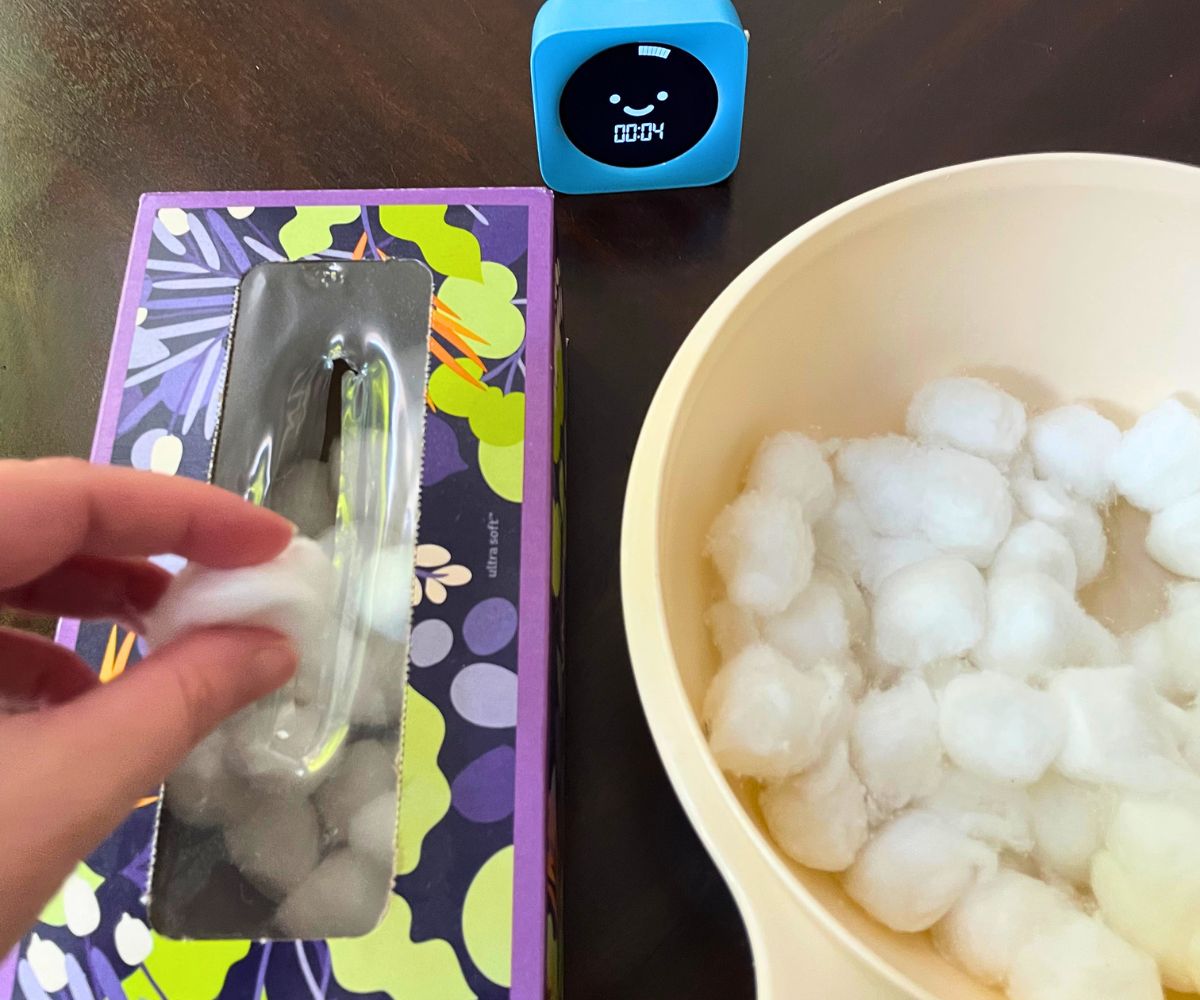
Then, have them complete that round.
Next, how many can they fit if they can stuff them in?
After they estimate and do that round, ask them what changed – what was compressed the second time round, creating more space for more cotton balls?
3. Candy Corn Chopsticks Trials
Intro: How many pieces of candy corn can you transfer per second with your dominant hand versus your non-dominant hand?
Supplies: Candy Corn, chopsticks, two bowls, a timer
Fill a bowl with Candy Corn, and set the timer for 60 seconds. Each person takes a turn transferring as many candy corn as they can from one bowl to the other with chopsticks, using their dominant hand.
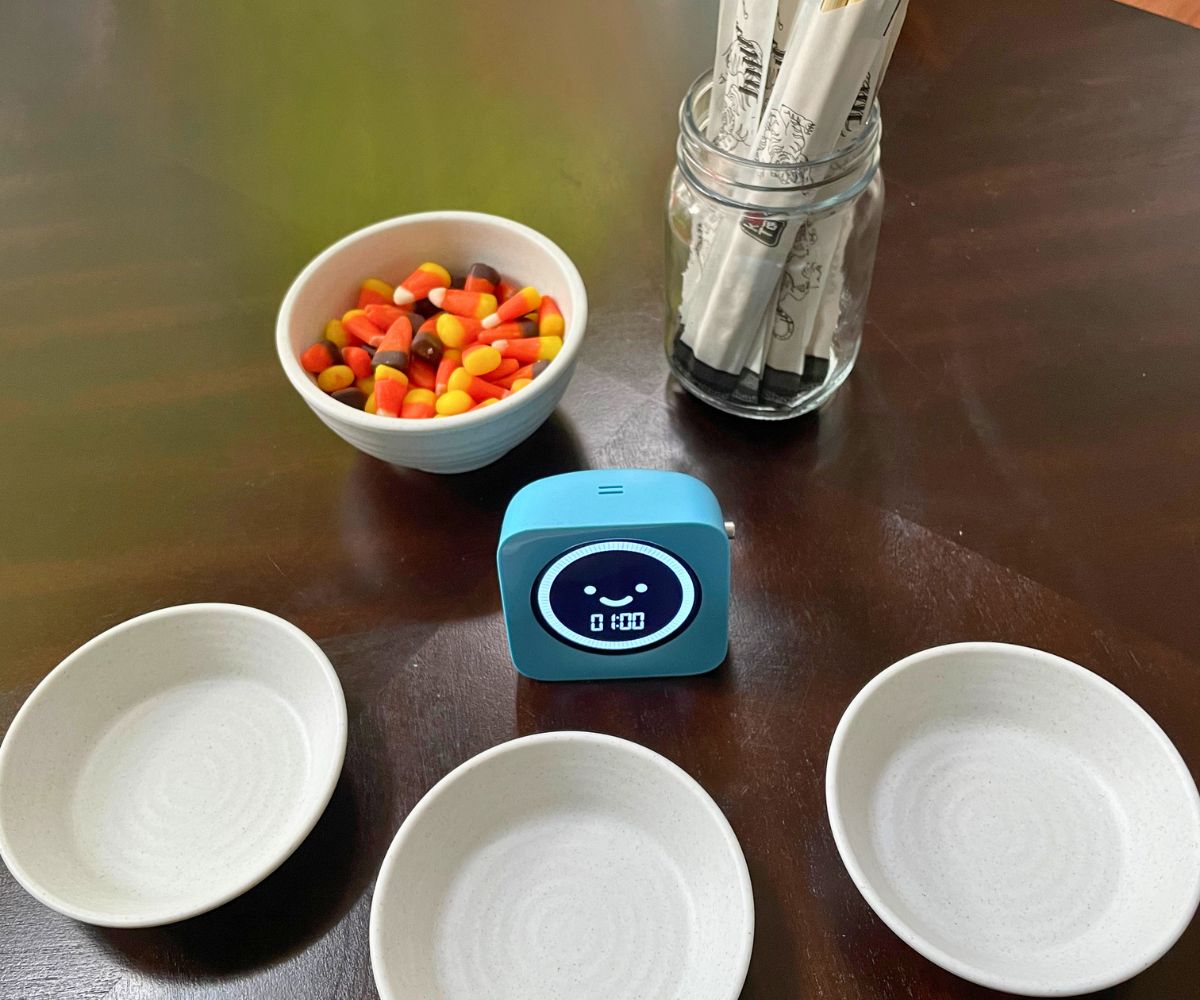
Count up the number transferred, then divide that by 60 to figure out how many pieces per second they were able to do.
Then, change things up by having each player use their non-dominant hand to do the transferring.
How many pieces of candy were they able to do per second versus using their dominant hand?
Fall STEM Activities for Kids
Below, find some of my favorite STEM activities for kids that both teach them some hands-on lessons AND get them excited about the Fall season.
1. Friction Tech Deck Race
Intro: What does friction do when you’re trying to win a Tech Deck race with a piece of candy?
Supplies: tech decks/mini skateboards, pieces of candy, masking tape, a timer
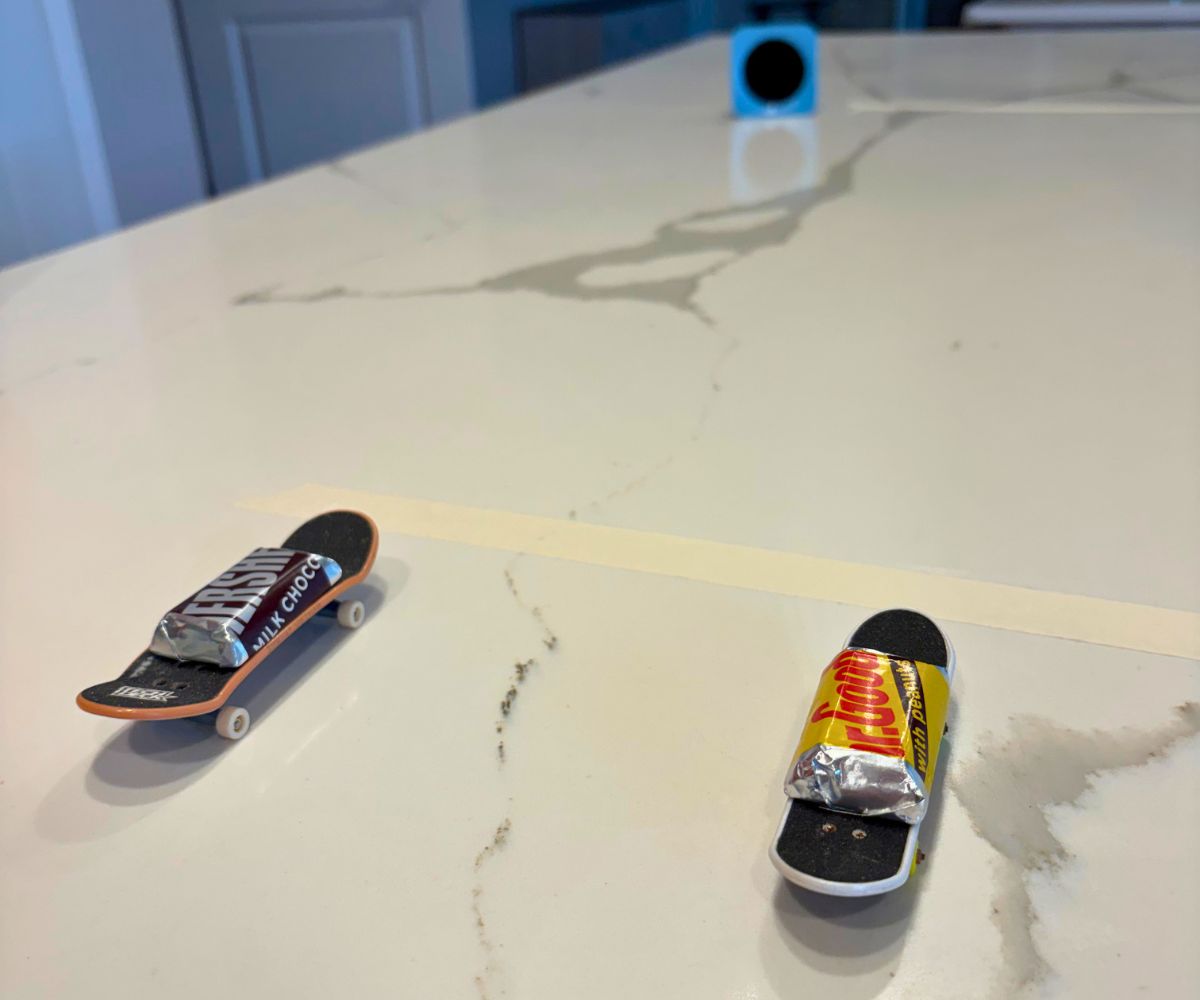
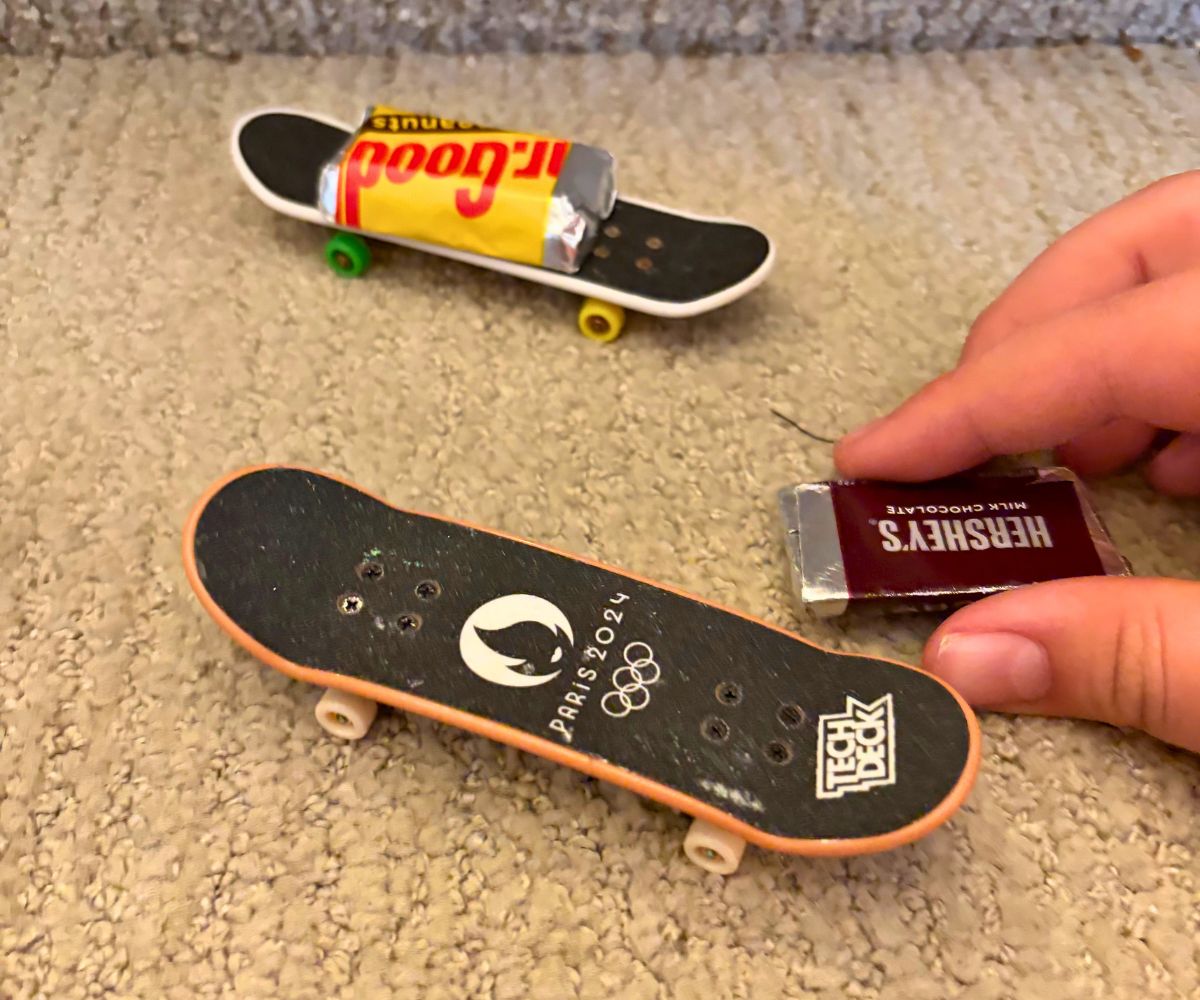
Set up a piece of masking tape on a smooth floor (wood/linoleum, etc.) at the starting line, and one piece further away at the finish line.
Each person gets a mini skateboard and one piece of candy. Who can get their piece of candy across the finish line fastest (go ahead and time it)?
Now, try the same experiment on a surface with more friction, such as carpet or a wooden deck.
Ask kids if they think it’ll take longer or shorter for their piece of candy to make it across the finish line.
Time it, then discuss the role of friction afterwards.
2. Halloween Candy Transport Game
Intro: How far can two kids transport one piece of candy while using two car tracks and one mini car?
My husband and son had an absolute blast doing this.
Supplies: two car race tracks, a mini car (like Hot Wheels), a piece of candy (all can be found at Dollar Tree), a timer
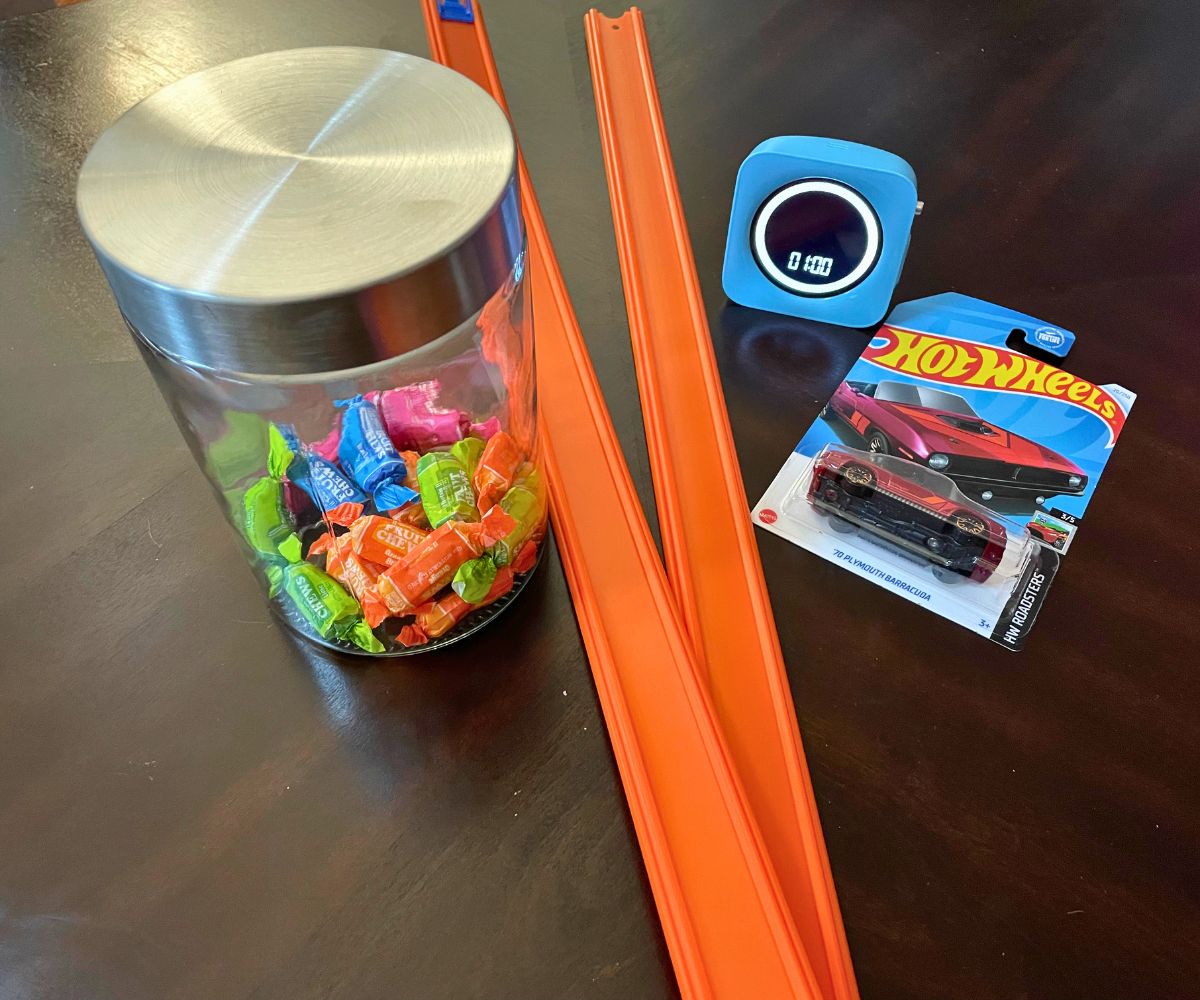
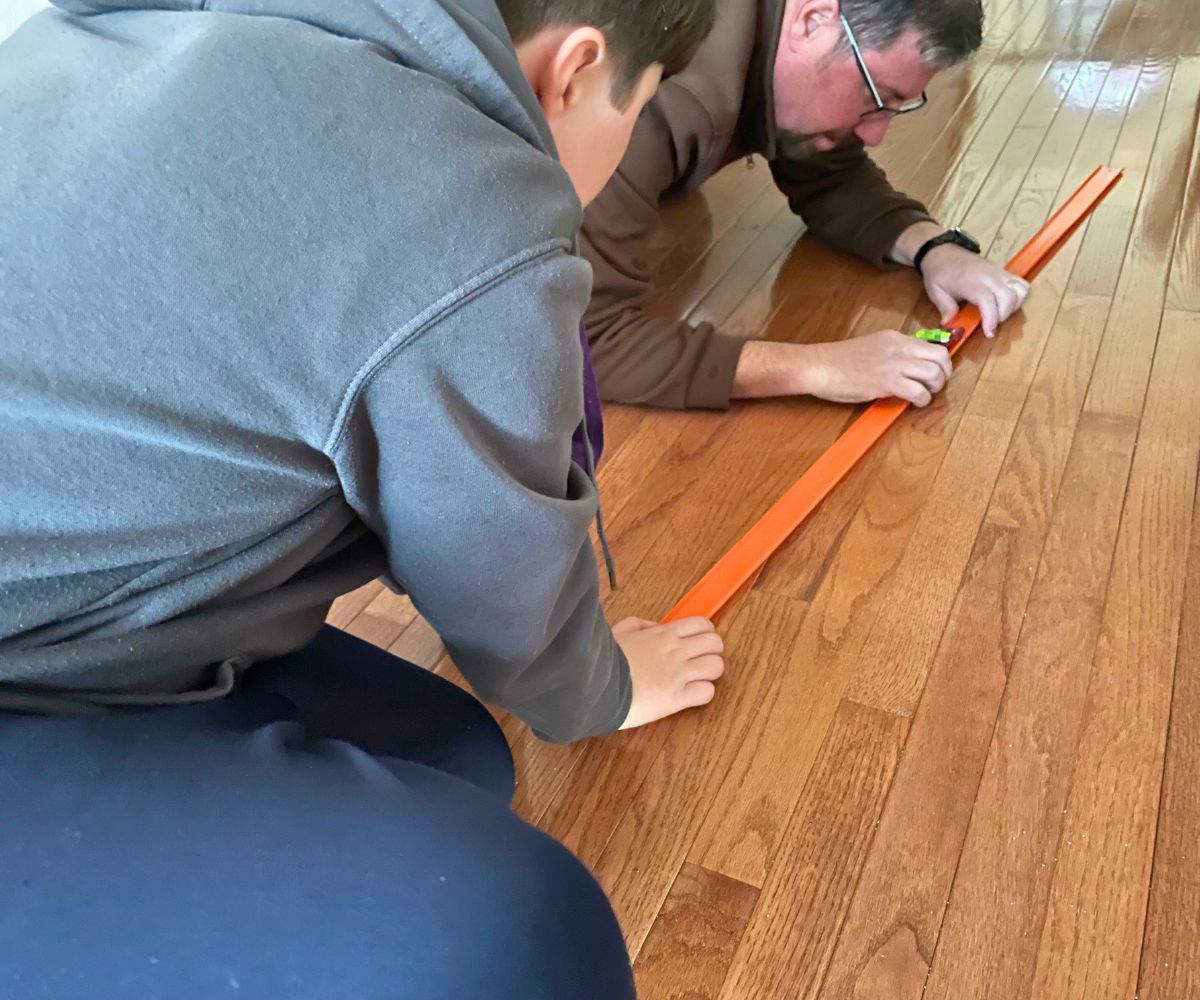
Pair kids off to work together transporting the piece of candy across a room as far as they can.
Since there are only two car tracks, they will need to leap-frog to build the track as they go. Lots of teamwork, here!
Hint: you can make a rule that if the candy falls, they must start over.
Their actual goal is figuring out how steep they can make the ramp without losing the piece of candy, because that’s where the speed and distance come from.
3. Candy Target Catapult with Money Constraints
Intro: Can your child build the best catapult possible with money constraints for materials? Then, how can they tweak what they already have to make the candy plunge even further?
Supplies: $5-$10 (Dollar Tree would be great for this), big popsicle sticks, rubber bands, an empty bottle cap, and a pile of hard candy
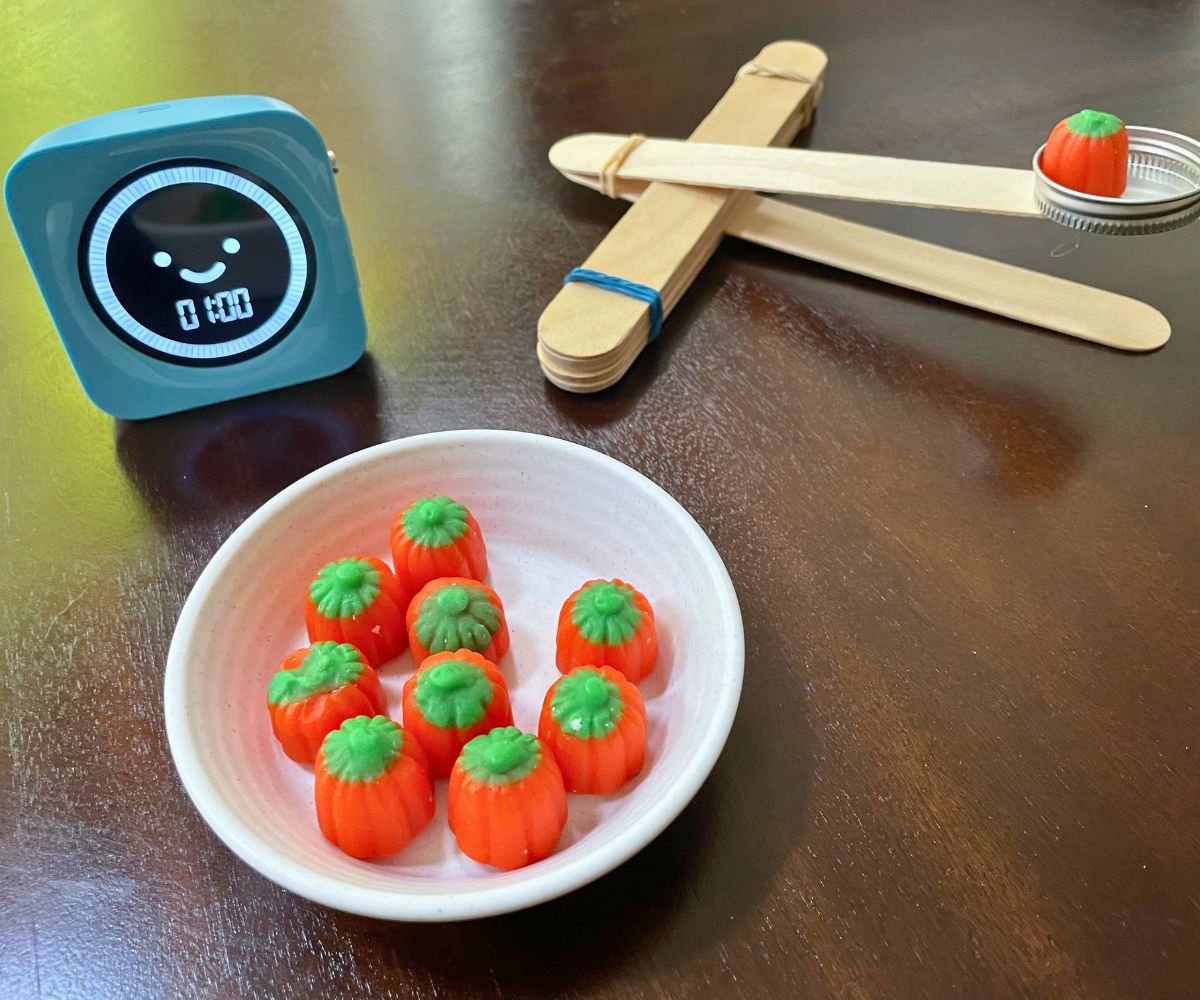
Ask your child to make a plan for building a catapult. You can go over the various parts of a catapult first, so that they’ll know what they need (see supplies list above).
Then, give them a budget to build their catapult, with the mission to build a catapult that will fling a piece of candy the furthest possible. Explain that engineers who design things always have money restraints.
Will they come in under budget, or struggle with going over budget and have to put something back?
Will they recycle a bottle cap from used items in the recycling bin, or buy a brand-new bottle of soda just for the bottle cap?
Now it’s time for the test run – have them fling a piece of candy several times to see how far they can get it.
Then have them measure how many feet it went.
Next, have them make tweaks to the catapult itself to see if they can make the candy go even farther the next run.
They could move the fulcrum – the bottle cap – closer to and further from the launch end to see if that makes a difference, tighten up the rubber bands and move those around, etc.
At the end, ask them if they think more money would’ve helped them fling it further, or not. What would they have spent the additional money on?
Could they have saved money from their purchases and gotten the same or better results?
4. Marshmallow Projectile Motion
Intro: Projecting marshmallows, anyone? Some serious fun is about to be had while kids learn about projectile motion.
Supplies: marshmallow slingshot, small marshmallows, a pool noodle, and a timer
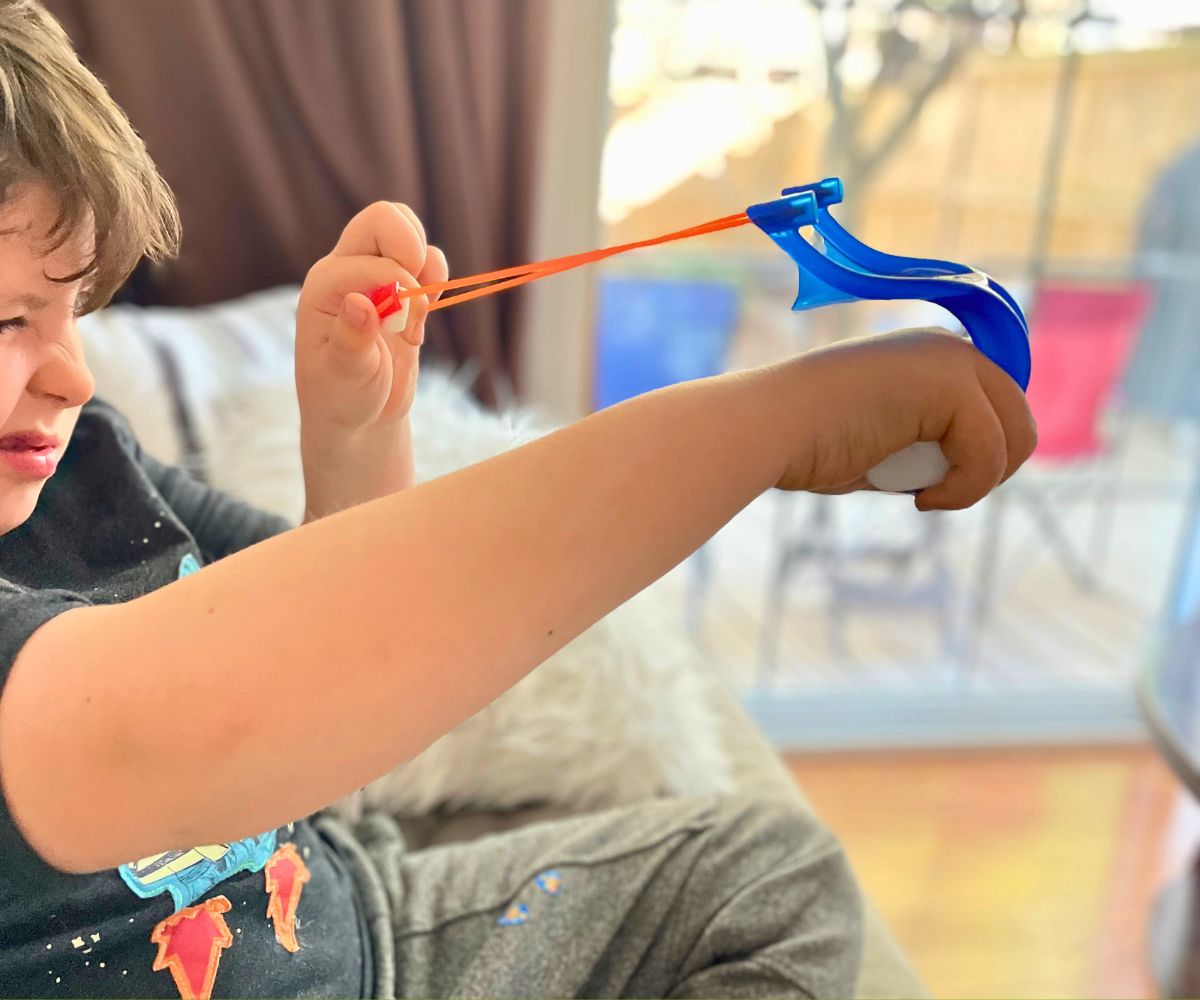
Create a hoop for kids to hurl marshmallows through using the pool noodle by cutting it in half (crosswise), rounding it into the shape of a ring, and duct-taping it together.
Set a timer for 60 seconds, and whoever blasts the most marshmallows through wins.
Ask the kids where they are aiming (hint: if they aim straight at the hoop, they will undershoot every single time because marshmallows and objects arc due to gravity).
I love how almost every single one of these Fall STEM activities for kids plays on their preconceived ideas of how they think things will play out…but then they test things out in real life and see with their very own eyes (or taste with their own taste buds) how wrong they were.
What a great way to capture a child’s attention long enough to teach them something.

Amanda L. Grossman is a writer and Certified Financial Education Instructor (CFEI®), a 2017 Plutus Foundation Grant Recipient, and founder of Money Prodigy. Her money work has been featured on Experian, GoBankingRates, PT Money, CA.gov, Rockstar Finance, the Houston Chronicle, and Colonial Life.
Amanda is the founder and CEO of Frugal Confessions, LLC. Read more here or on LinkedIn.